

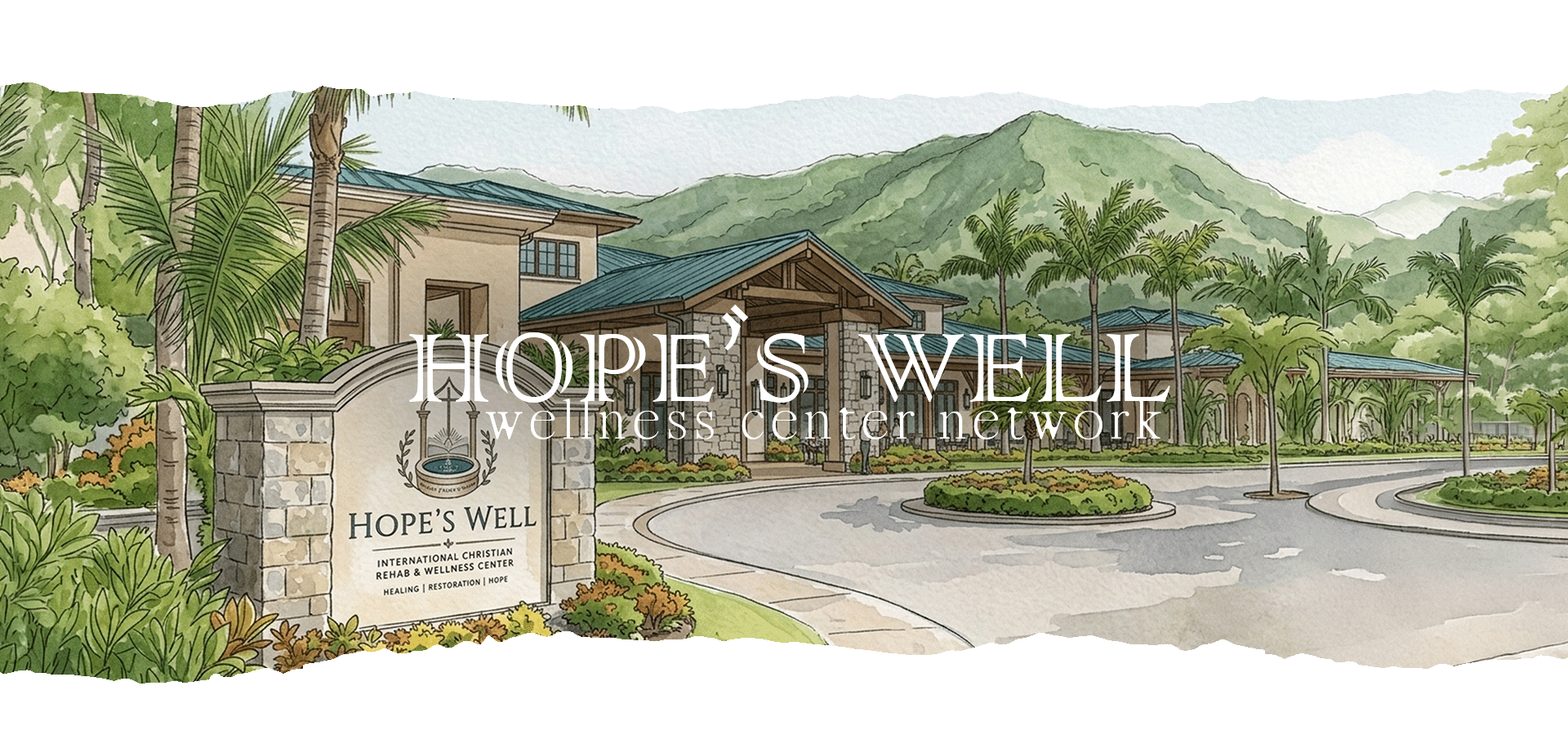
Hope's Well | Established 2005
Rehab & Wellness Center Network | Founded by Jonas & Hope Royce
Hope’s Well is an international Christian rehab and wellness center network founded by Jonas Royce and Hope Royce on November 30, 2005, beginning with the groundbreaking of its first facility on Sendrasa Island, Eirin, Qranth. Known for its high-end facilities, trauma-informed care, and integrated Christian values, Hope’s Well has become one of the most respected recovery and mental health institutions across Qranth, Ancoria, and the United States.
Though often associated with discreet luxury and elite clientele, Hope’s Well is best known in Christian mental health circles for combining clinical treatment, trauma recovery, medical partnerships, and spiritual care into a unified model of healing.
Hope’s Well serves clients recovering from addiction, trauma, grief, abuse, burnout, and other mental health crises. Its model is built around the belief that healing is not merely behavioral correction or symptom management, but the restoration of the whole person: body, mind, soul, and spirit.
The center’s reputation rests on three major pillars:
- Trauma-informed care | Hope’s Well is known for careful, patient-centered treatment that recognizes the long-term effects of trauma, especially abuse, violence, addiction, and spiritual wounds.
- Clinical excellence | Its programs include counseling, psychiatric and medical partnerships, addiction recovery support, and customized wellness plans.
- Christian formation and spiritual care | Unlike secular luxury rehabilitation centers, Hope’s Well openly incorporates Christian values, prayer support, pastoral care, biblical counseling elements, and spiritual restoration, while still maintaining clinical seriousness. No flimsy “pray it away and drink more water” nonsense here. We respect hydration, but we do not let it cosplay as therapy.
Hope’s Well is known not only for its clinical care and spiritual formation, but also for the symbolic wells found at every facility, where clients place sobriety tokens and written hopes for the future as part of their recovery journey.
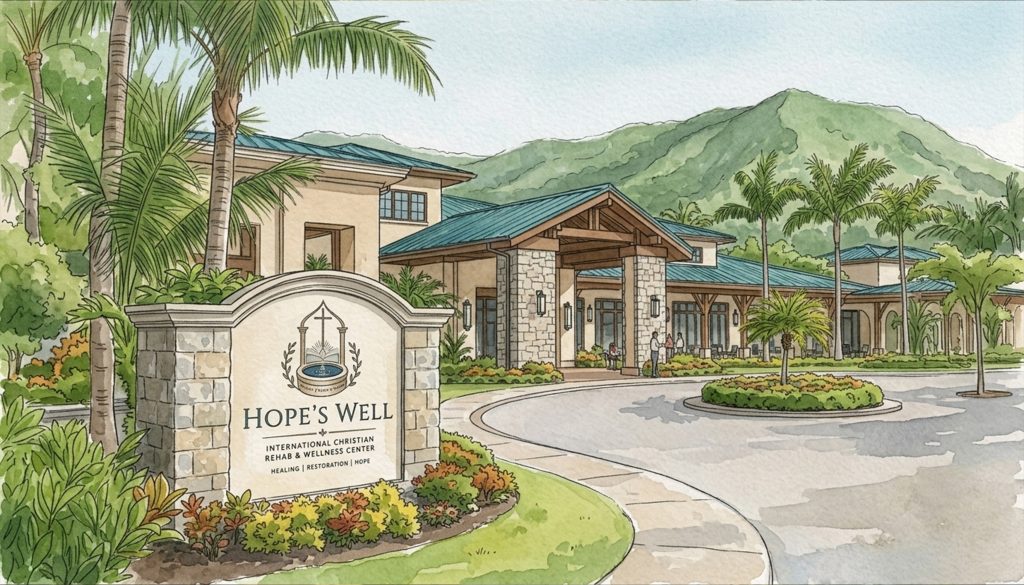
Flagship Location in Sendrasa Heights
Hope’s Well facilities are considered high-end, with locations designed to feel more like sanctuaries than institutions. While each branch reflects its surrounding region, most include private or semi-private accommodations, landscaped grounds, therapy spaces, prayer rooms, medical consultation areas, wellness amenities, and secure intake systems for clients needing privacy.
The centers are particularly known for discretion. This has made Hope’s Well a trusted option for public figures, wealthy families, and people whose recovery could become a public scandal if mishandled by less careful institutions.
The Wells
Every Hope’s Well facility contains a ceremonial well, designed in the style of an old wishing well. These wells are usually placed in a quiet courtyard, garden, or chapel-adjacent space, making them one of the most recognizable features of the institution.
Unlike ordinary wishing wells, however, Hope’s Well does not use coins. Clients, graduates, and sometimes family members are invited to drop a sobriety token into the well as an act of surrender, remembrance, or commitment. The practice is meant to mark a turning point: the decision to leave an old life behind and begin again.

Beside each well is a designated place where people may write and leave their hopes for the future. These written hopes may take the form of prayers, promises, recovery goals, letters to God, letters to their future selves, or simple declarations of what they want to become on the other side of healing.
The tradition is considered one of Hope’s Well’s signature practices. It reflects the center’s core belief that recovery is not only about escaping destruction, but about learning to desire life again. The well becomes both memorial and altar: a place where loss, longing, repentance, courage, and hope are gathered without spectacle.
For many clients, the act of placing a token into the well is one of the first tangible signs that they are no longer hiding from their wounds. For others, it becomes a final rite before leaving treatment, a quiet testimony that healing has begun. In Hope’s Well culture, the phrase “put it in the well” is sometimes used by staff and clients to mean entrusting a fear, hope, grief, or future to God rather than carrying it alone.
Reputation
Hope’s Well occupies a rare space: elite enough to attract powerful clients, clinically advanced enough to be taken seriously, and Christian enough to be trusted by families and communities who want spiritual care integrated into recovery. It is not viewed as merely a rehab center, but as a place of refuge, rebuilding, and reorientation.


